Managing Complex Change in Governments or IT Organizations. Adapting and Expanding the Lippitt-Knoster Model.
Introduction and Context
In an era where technology rapidly evolves, digital transformation has become imperative for governments globally. This shift promises enhanced citizen services, improved transparency, and operational efficiency. However, managing such a complex change is challenging. Drawing inspiration from the Lippitt-Knoster Model for Managing Complex Change, we can outline a robust framework tailored to digital transformation in the public sector. This model emphasizes seven critical elements: Vision, Strategy, Objectives, Capabilities, Architecture, Roadmap, and Projects & Programs. Missing any of these components can significantly hinder the transformation process.
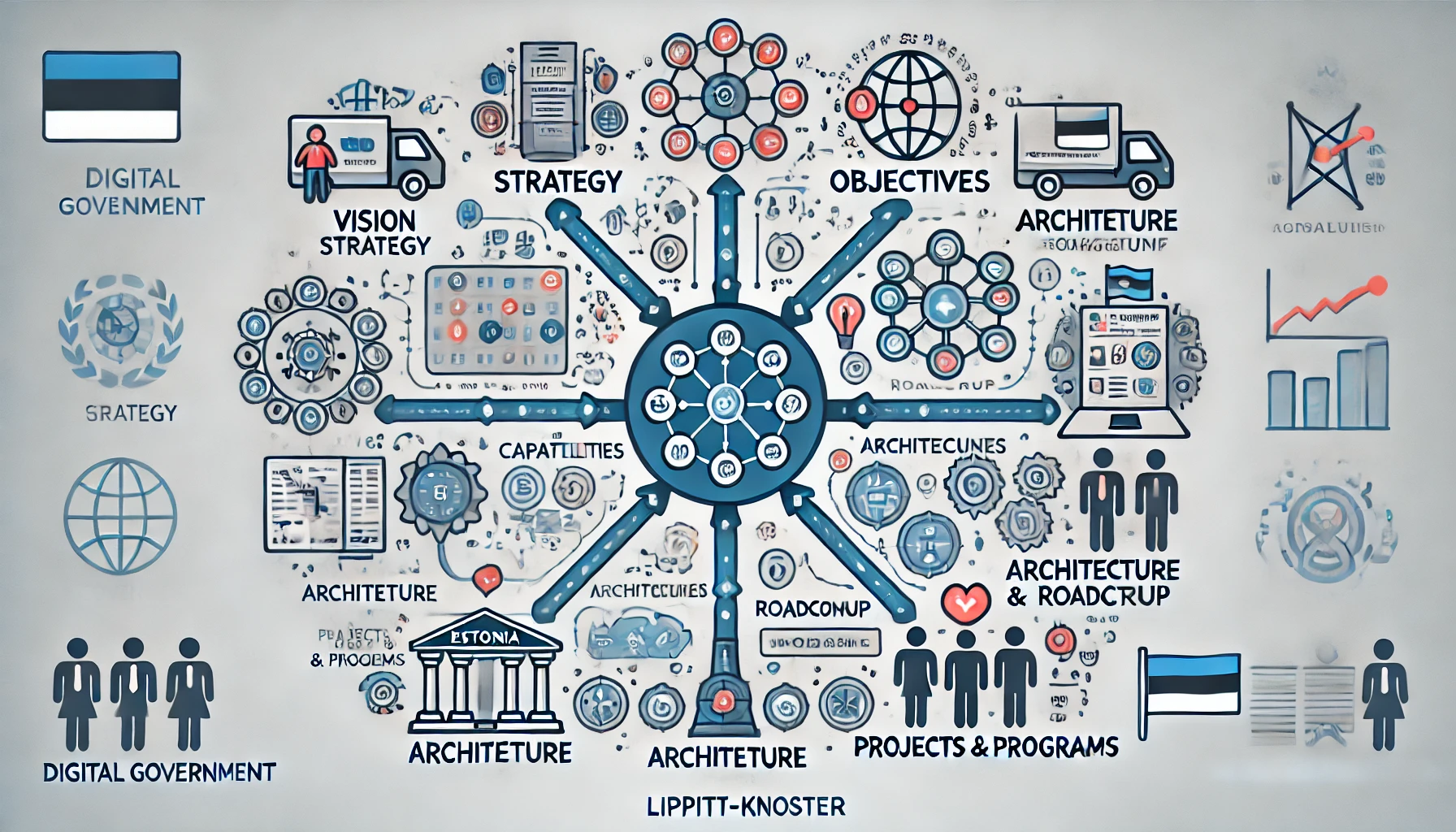
The Lippitt-Knoster Model Adapted for Digital Transformation
-
Vision The vision defines the ‘what’ of your transformation. In government, this might include goals such as enhanced public services, increased transparency, or greater operational efficiency. A clear vision provides direction and purpose, aligning all efforts towards a common goal.
-
Strategy Strategy explains the ‘why’ and ‘how.’ It outlines the rationale behind your vision and the approach to achieving it. In digital government, a solid strategy ensures technological initiatives are aligned with policy objectives, guiding decision-making and fostering cohesive efforts.
-
Objectives Objectives are specific, measurable goals that mark progress toward the vision. They help maintain focus on key priorities and facilitate accountability. Clear objectives ensure that resources are used effectively and outcomes are achieved.
-
Capabilities Capabilities refer to the new skills, processes, or technologies the organization will develop or acquire. These can include enhanced data analytics, improved cybersecurity, or new citizen engagement platforms. Building these capabilities is crucial for achieving transformation objectives and sustaining long-term success.
-
Architecture A robust architecture ensures all technological components work together seamlessly. This includes data architecture, IT infrastructure, enterprise architecture, and functional architecture. Effective architecture minimizes technical debt, enhances interoperability, and supports scalable solutions.
-
Roadmap The roadmap is the tactical plan that outlines the sequence of actions required to implement the strategy. It provides a timeline, assigns responsibilities, and sets milestones. A detailed roadmap helps avoid uncertainty and missteps, ensuring that each phase of the transformation is executed efficiently.
-
Projects & Programs Projects and programs are the practical initiatives that turn the strategy into reality. They encompass specific actions and deliverables, driving tangible progress towards the objectives. In government, well-managed projects ensure that strategic goals are translated into operational success.
Case Studies and Real-World Examples
Real-world examples illustrate how these elements work in practice. For instance, Estonia’s digital transformation has been widely recognized. Their clear vision of a digital society, supported by strategic objectives and robust capabilities such as their X-Road data exchange layer, showcases how government initiatives can be effectively managed.
Comparative Analysis with Other Models
Other change management models can complement the Lippitt-Knoster Model:
Kotter’s 8-Step Change Model
- This model emphasizes creating urgency, building coalitions, and generating short-term wins, which can be pivotal in maintaining momentum in government projects.
ADKAR Model
- Focusing on Awareness, Desire, Knowledge, Ability, and Reinforcement, the ADKAR Model can help address individual and organizational resistance to change.
Lewin’s Change Management Model
- Lewin’s model highlights the importance of preparing for change (unfreezing), making the change, and solidifying the new state (refreezing), which is crucial for ensuring sustainable transformation.
Bridges’ Transition Model
- This model emphasizes the psychological transition individuals undergo during change, which can be critical for managing stakeholder engagement in government projects.
McKinsey 7-S Framework
- This framework aligns seven internal aspects of an organization, Strategy, Structure, Systems, Shared Values, Style, Staff, and Skills, ensuring comprehensive organizational alignment.
Practical Recommendations
-
Vision: Engage stakeholders early to develop a shared vision.
-
Strategy: Align technological initiatives with policy objectives.
-
Objectives: Set clear, measurable goals to track progress.
-
Capabilities: Invest in building necessary skills and technologies.
-
Architecture: Ensure seamless integration of technological components.
-
Roadmap: Develop a detailed action plan with timelines and responsibilities.
-
Projects & Programs: Manage projects effectively to ensure strategic goals are realized.
Conclusion
Managing complex change in digital governments requires a holistic and integrated approach. By ensuring all seven elements, Vision, Strategy, Objectives, Capabilities, Architecture, Roadmap, and Projects & Programs, are in place, governments can navigate the challenges of digital transformation effectively. Each component is interdependent, and missing even one can derail the initiative. Therefore, leveraging a comprehensive framework, complemented by insights from other change management models, is essential for successful digital transformation in the public sector.
Future Outlook
As digital transformation continues to evolve, governments must remain adaptable, continuously refining their strategies and capabilities. By fostering a culture of innovation and leveraging emerging technologies, governments can better serve their citizens and achieve sustainable growth in the digital age.
Managing Complex Change in Governments or IT Organizations. Adapting and Expanding the Lippitt-Knoster Model.
Dit artikel is exclusief beschikbaar voor nieuwsbrief-abonnees. Schrijf je in voor toegang tot 880+ artikelen.
Geen spam. Uitschrijven op elk moment.
AI & Security Intelligence
Wekelijkse nieuwsbrief met AI updates, security alerts en compliance inzichten, direct in uw inbox.
Security & AI Operating Model
Advisory met executiekracht
Van BIO2 en NIS2 tot EU AI Act, embedded in uw operating model, niet als extern project. Maandelijks opzegbaar, met assessments als bewijsvoering.