The Evolution of Enterprise Architecture: Bridging IT Development and Data Products
IntroductionIn the rapidly evolving landscape of digital transformation, Enterprise Architecture (EA) has emerged as a critical discipline for aligning business strategies with technological capabilities. As organizations grapple with the complexities of modern enterprise systems, a new paradigm is emerging, one that bridges traditional IT development with the burgeoning field of data products. This article explores the evolving role of EA in enabling strategic business transformation, with a particular focus on the integration of data architecture and its impact on enterprise systems.
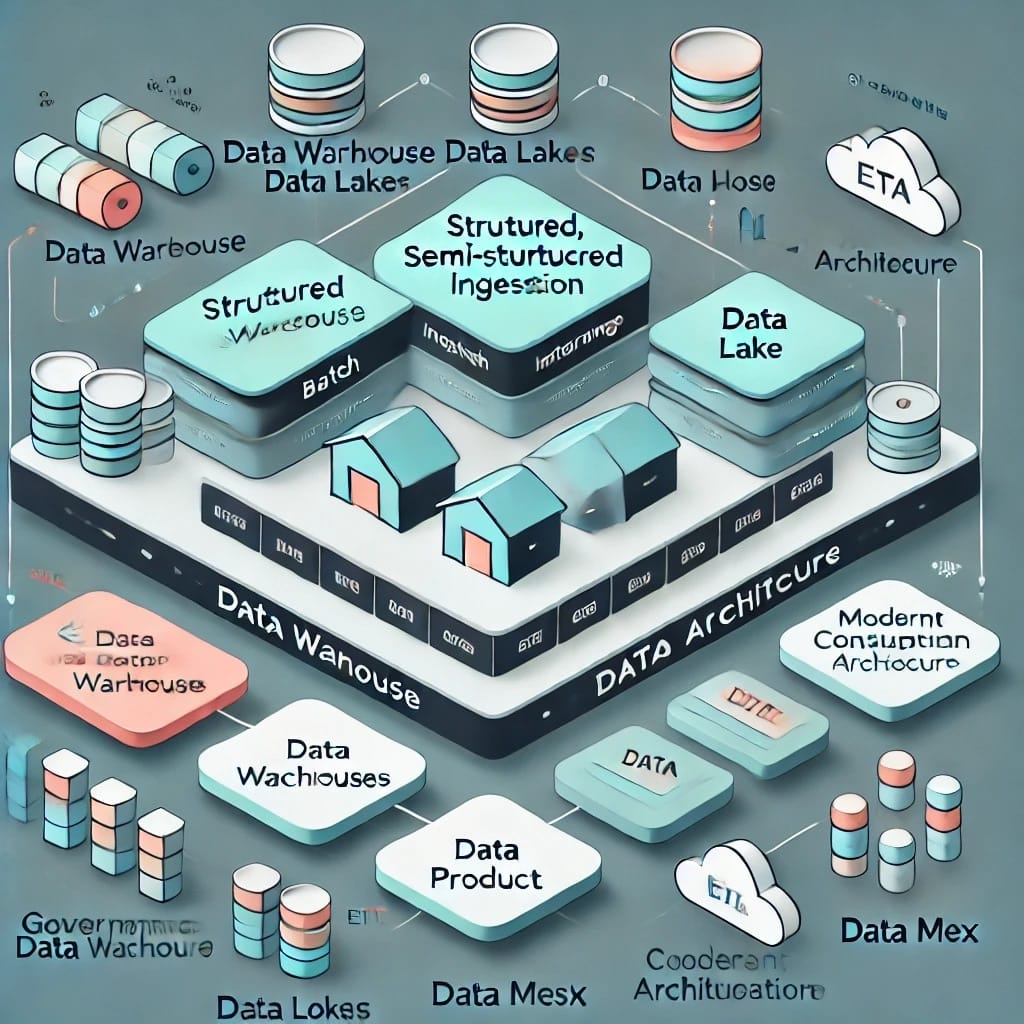
BackgroundEnterprise Architecture has traditionally focused on aligning IT infrastructure with business goals. However, the digital revolution has expanded its scope, pushing EA to encompass not just technology but also business processes, information flows, and organizational structures. As data becomes the lifeblood of modern enterprises, the integration of data architecture into EA practices has become paramount.
Data architecture, a subset of EA, involves understanding, planning, designing, implementing, and reviewing the data ecosystem within an enterprise. This ecosystem comprises multiple platforms, products, tools, and technologies related to data, along with various data layers crucial for enterprise systems. The complexity of data architecture mirrors the multifaceted nature of modern enterprise systems, which achieve specific business and technical processes through a combination of various products, services, and software.
1. The Convergence of IT Development and Data Products
Traditionally, IT development focused on creating software applications and systems to support business processes. Data was often considered a byproduct of these systems. However, the rise of big data and analytics has transformed this paradigm. Data products, tools, applications, and services built primarily around data, have become central to many organizations’ strategies.
Similarities:
-
Both IT development and data products aim to solve business problems and create value.
-
They require robust project management, quality assurance, and deployment processes.
-
Both involve coding, testing, and iteration cycles.
Differences:
-
IT development typically focuses on application logic and user interfaces, while data products emphasize data processing, analysis, and insights generation.
-
Data products often require more specialized skills in statistics, machine learning, and data science.
-
The lifecycle of data products is often more fluid, with continuous updates based on new data inputs, whereas traditional IT applications might have more defined release cycles.
Case Study: Financial Services Firm’s TransitionA global financial services firm embarked on a digital transformation journey, transitioning from traditional IT-centric development to a data-driven approach. By leveraging EA principles, they created a unified data platform that integrated their legacy systems with new data products. This resulted in a 40% improvement in customer insights generation and a 25% reduction in time-to-market for new financial products.
2. The Role of Enterprise Architecture in Data-Driven Transformation
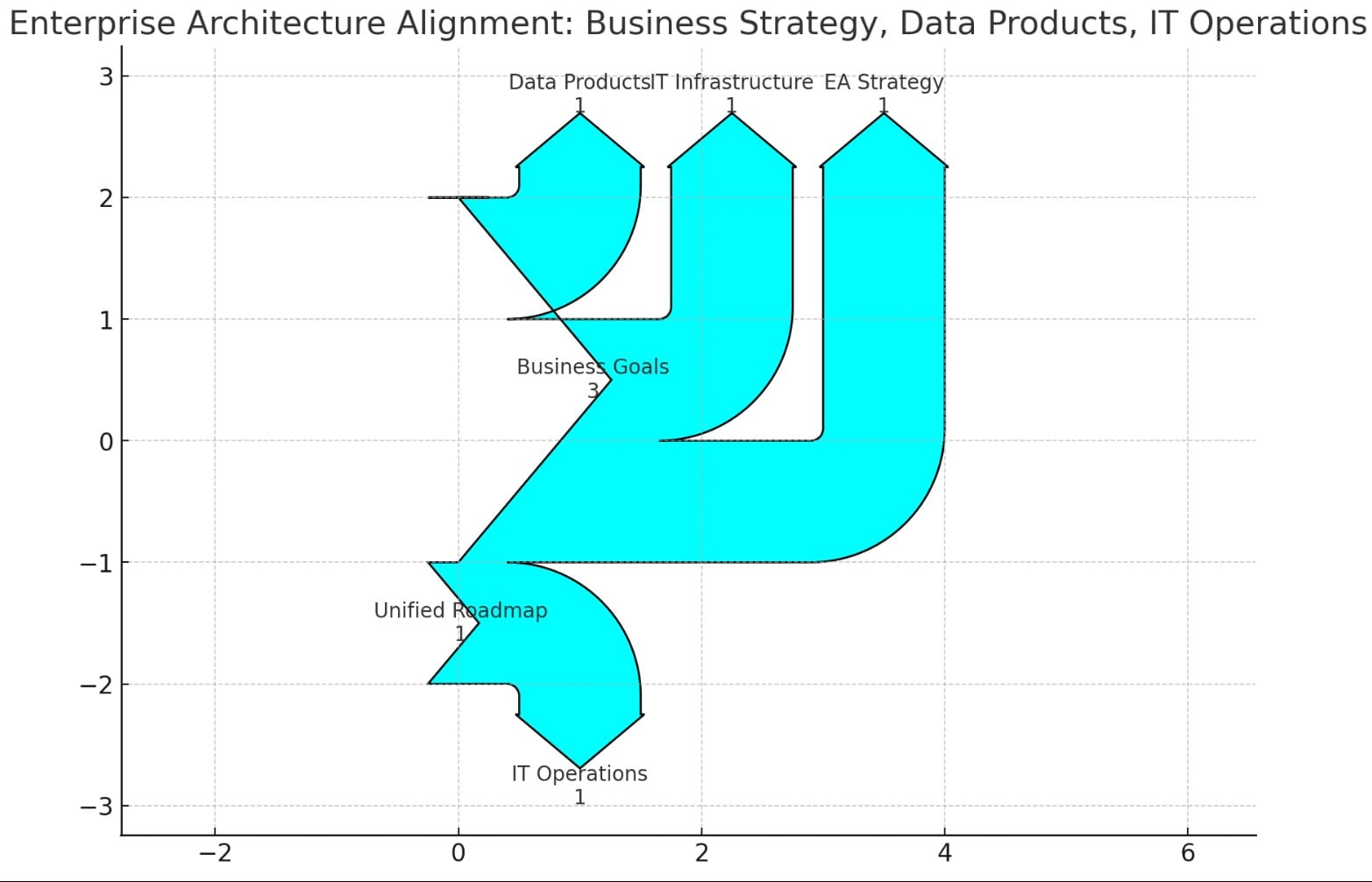
EA plays a crucial role in orchestrating the integration of data architecture into the broader organizational strategy. It provides the framework for aligning data initiatives with business objectives, ensuring that investments in data products and platforms deliver tangible value.
Key EA Contributions:
-
Develops a holistic view of the organization’s data assets and their relationships to business processes.
-
Guides the selection and integration of data technologies and platforms.
-
Ensures data governance and compliance across the enterprise.
-
Facilitates the creation of reusable data components and services.
Data Architecture Layers within EA:
-
Data Ingestion
-
Data Storage
-
Data Processing
-
Data Integration
-
Data Transformation
-
Data Analytics
-
Data Reporting
Each of these layers encompasses numerous tools, cloud services, and technologies, reflecting the complexity of modern data ecosystems.
3. Emerging Architectural Patterns: Lambda and Data Mesh
As organizations grapple with increasing data volumes and complexity, new architectural patterns are emerging. Two notable examples are the Lambda Architecture and the Data Mesh Architecture.
*Lambda Architecture:*This pattern combines batch processing with real-time stream processing to handle large volumes of data. It consists of three main layers:
-
Batch Layer: For comprehensive, accurate views of batch data
-
Speed Layer: For real-time views
-
Serving Layer: To respond to queries
*Data Mesh Architecture:*This decentralized approach treats data as a product, emphasizing domain-oriented ownership and architecture. Key components include:
-
Domain-specific Data Products
-
Self-serve Data Infrastructure
-
Federated Computational Governance
These architectural patterns represent a shift from monolithic data warehouses to more flexible, scalable approaches that align closely with business domains.
4. The Impact of Data Concepts on Enterprise Architecture
Several key data concepts are reshaping how EA approaches data management and integration:
-
ETL (Extract, Transform, Load) vs ELT (Extract, Load, Transform): The shift towards ELT reflects the increasing power of modern data storage and processing systems.
-
CDC (Change Data Capture): Enables real-time data integration by capturing and propagating changes from source systems.
-
MDM (Master Data Management): Ensures consistency and accuracy of critical data across the enterprise.
These concepts are driving changes in how EA designs data flows and integrations across the enterprise.
5. Challenges and Considerations
The integration of data architecture into EA practices presents several challenges:
-
Skill Gap: EA practitioners need to upskill in data science and analytics.
-
Technology Pace: Rapid evolution of data technologies requires continuous learning and adaptation.
-
Data Governance: Balancing data accessibility with security and compliance requirements.
-
Cultural Shift: Moving from a traditional IT-centric view to a data-centric organizational mindset.
Analysis of Current Trends
-
Rise of Cloud-Native Data Platforms: Organizations are increasingly adopting cloud-based data solutions, requiring EA to adapt to cloud-native architectures.
-
AI and Machine Learning Integration: The integration of AI/ML into data products is driving new architectural considerations around model management and ethical AI use.
-
Data Democratization: There’s a growing trend towards making data accessible across the organization, challenging traditional data governance models.
-
Real-time Data Processing: The demand for real-time insights is pushing architectures towards event-driven and streaming patterns.
-
Data Observability: Increasing focus on monitoring and understanding data quality, lineage, and usage patterns across the enterprise.
Future Outlook
As data continues to grow in importance, EA will play an increasingly critical role in ensuring that organizations can effectively leverage their data assets. We can expect to see:
-
Closer integration between EA and data governance practices.
-
Emergence of new roles like Data Product Managers, bridging business, IT, and data science.
-
Increased emphasis on ethical considerations in data architecture and use.
-
Evolution of EA frameworks to better accommodate data-centric and AI-driven architectures.
Conclusion
The convergence of IT development and data products represents a significant shift in how organizations approach Enterprise Architecture. By embracing data architecture as a core component of EA, organizations can better align their technological capabilities with business objectives, driving innovation and competitive advantage. As we move forward, the ability to effectively manage and leverage data will be a key differentiator, and Enterprise Architecture will be at the forefront of this transformation, guiding organizations through the complexities of the data-driven future.
The Evolution of Enterprise Architecture: Bridging IT Development and Data Products
Dit artikel is exclusief beschikbaar voor nieuwsbrief-abonnees. Schrijf je in voor toegang tot 880+ artikelen.
Geen spam. Uitschrijven op elk moment.
AI & Security Intelligence
Wekelijkse nieuwsbrief met AI updates, security alerts en compliance inzichten, direct in uw inbox.
Security & AI Operating Model
Advisory met executiekracht
Van BIO2 en NIS2 tot EU AI Act, embedded in uw operating model, niet als extern project. Maandelijks opzegbaar, met assessments als bewijsvoering.