The integration of large language models in judicial processes, opportunities, challenges, and ethical considerations.
Podcast of about the article.
Introduction
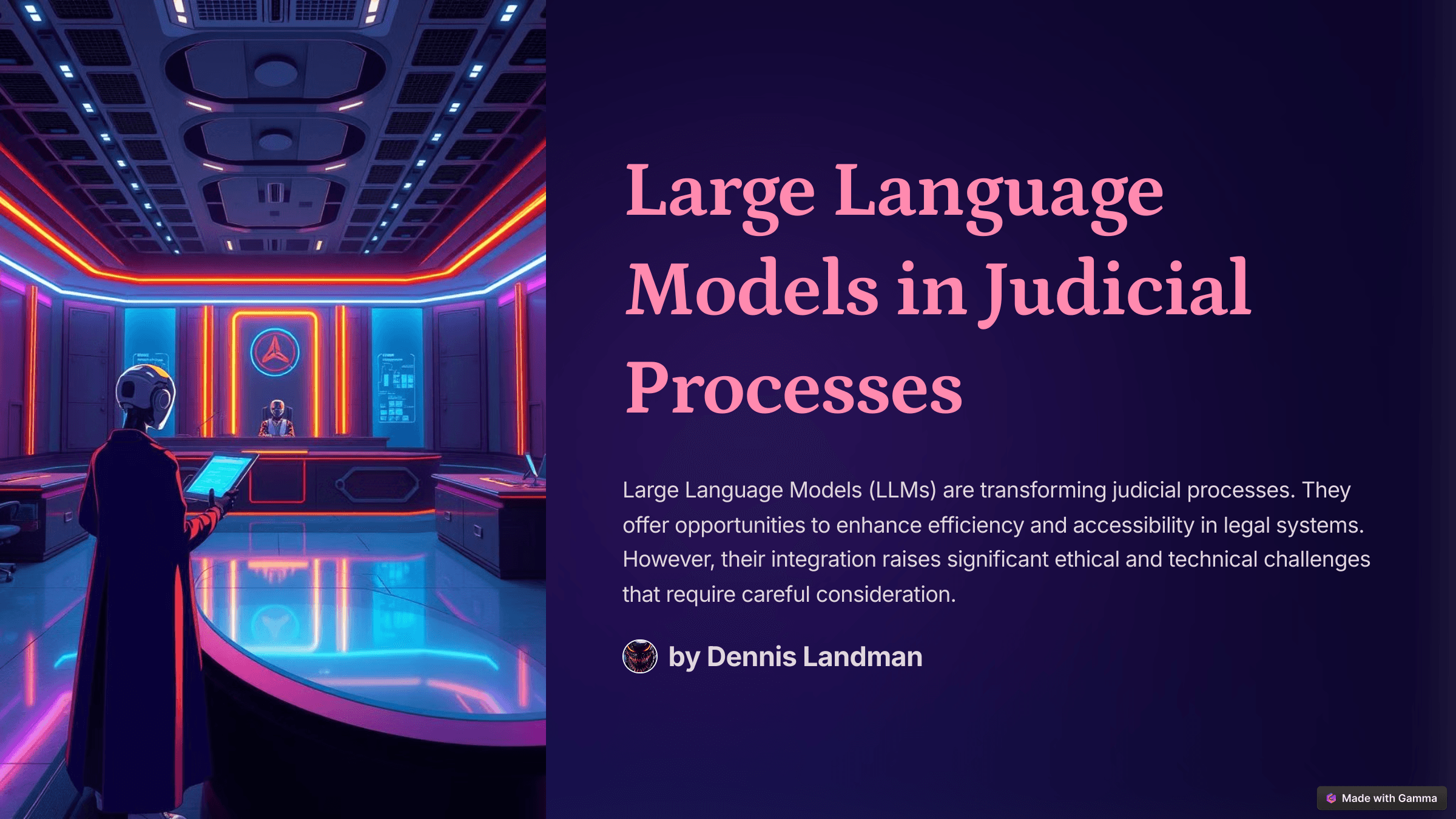
The judicial system is undergoing a transformative shift as artificial intelligence (AI) increasingly permeates its processes. At the forefront of this technological revolution are Large Language Models (LLMs), AI systems capable of understanding and generating human-like text. These models present opportunities for enhancing efficiency, accessibility, and consistency in legal processes. However, their integration also raises significant ethical, legal, and technical challenges that demand careful consideration. As we stand at this critical juncture, it is imperative that we thoroughly examine the implications of LLMs in judicial processes, balancing the potential for innovation with the fundamental principles of justice, fairness, and accountability. This article explores the multifaceted landscape of LLM integration in the judiciary, analyzing its opportunities and challenges, and proposing frameworks for responsible development and implementation.

Background and Context
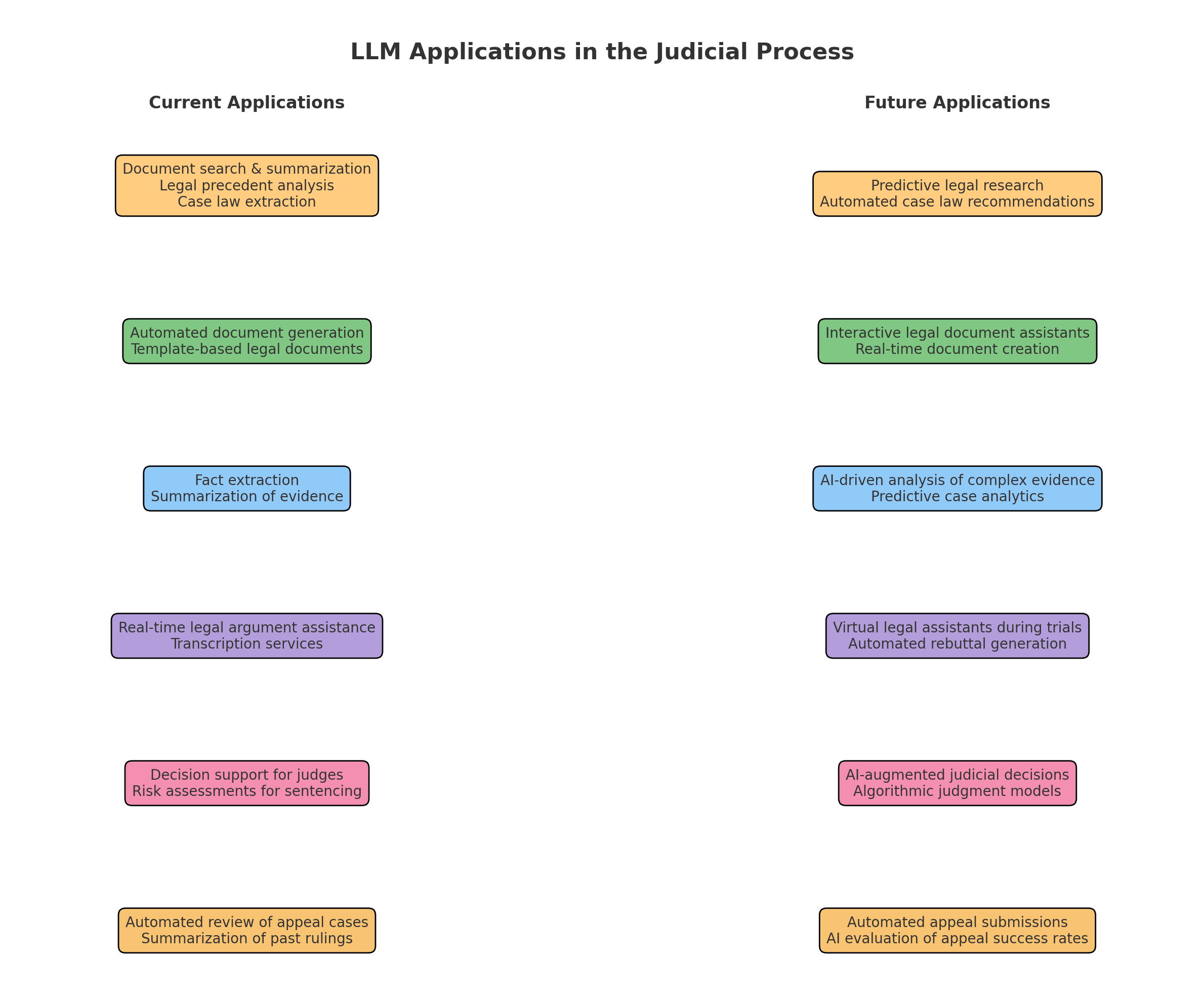
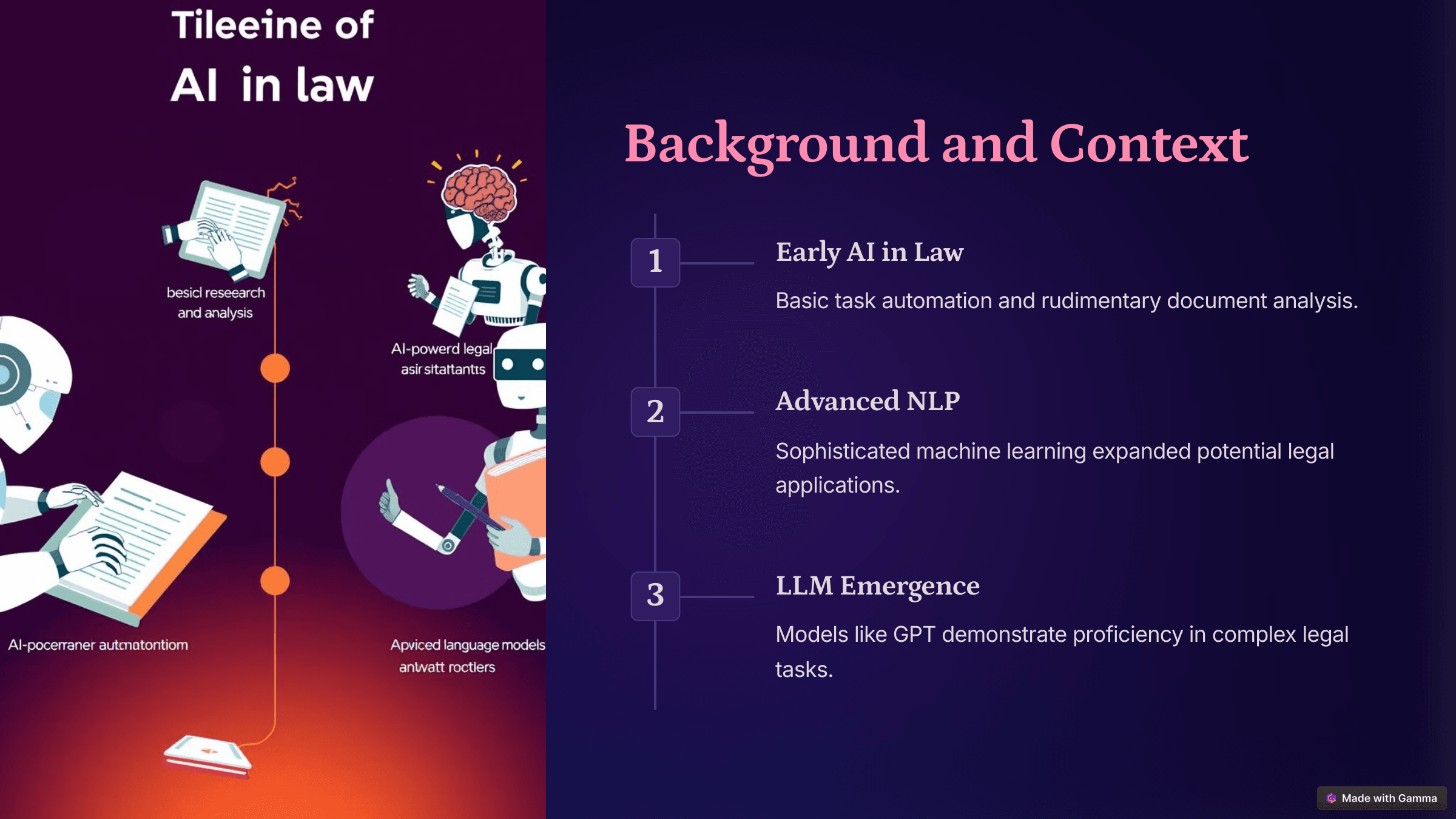
The integration of AI in legal processes has been a gradual evolution, marked by incremental advancements in technology and shifting attitudes within the legal community. Early applications of AI in law focused primarily on basic task automation and rudimentary document analysis. However, the advent of more sophisticated machine learning techniques, particularly in natural language processing, has dramatically expanded the potential applications of AI in legal contexts [1].
Large Language Models represent a significant leap forward in AI capabilities. These models, trained on vast corpora of text data, can understand and generate human-like language with remarkable accuracy. LLMs like GPT (Generative Pre-trained Transformer) models have demonstrated proficiency in tasks ranging from language translation to complex reasoning, making them particularly suited for applications in the legal domain [2].
Currently, LLMs are being employed in various capacities within the judicial system. They are assisting in legal research, automating document review processes, and even contributing to the drafting of legal documents. Some courts have begun experimenting with AI-powered systems for case management and preliminary decision-making in routine matters [3].
The integration of LLMs in judicial processes is underpinned by two key theoretical frameworks:
-
The “AI as a Tool” paradigm, which posits that AI systems should be viewed as assistive technologies that augment human decision-making rather than replace it entirely [4].
-
The “Algorithmic Fairness” framework, which focuses on ensuring that AI systems used in high-stakes decisions, such as legal judgments, are designed and implemented in ways that promote equity and avoid perpetuating biases [5].
As we delve deeper into the applications and implications of LLMs in the judiciary, it is crucial to keep these frameworks in mind, balancing the potential for technological advancement with the fundamental principles of justice and fairness that underpin our legal systems.
Opportunities for LLMs in Judicial Processes
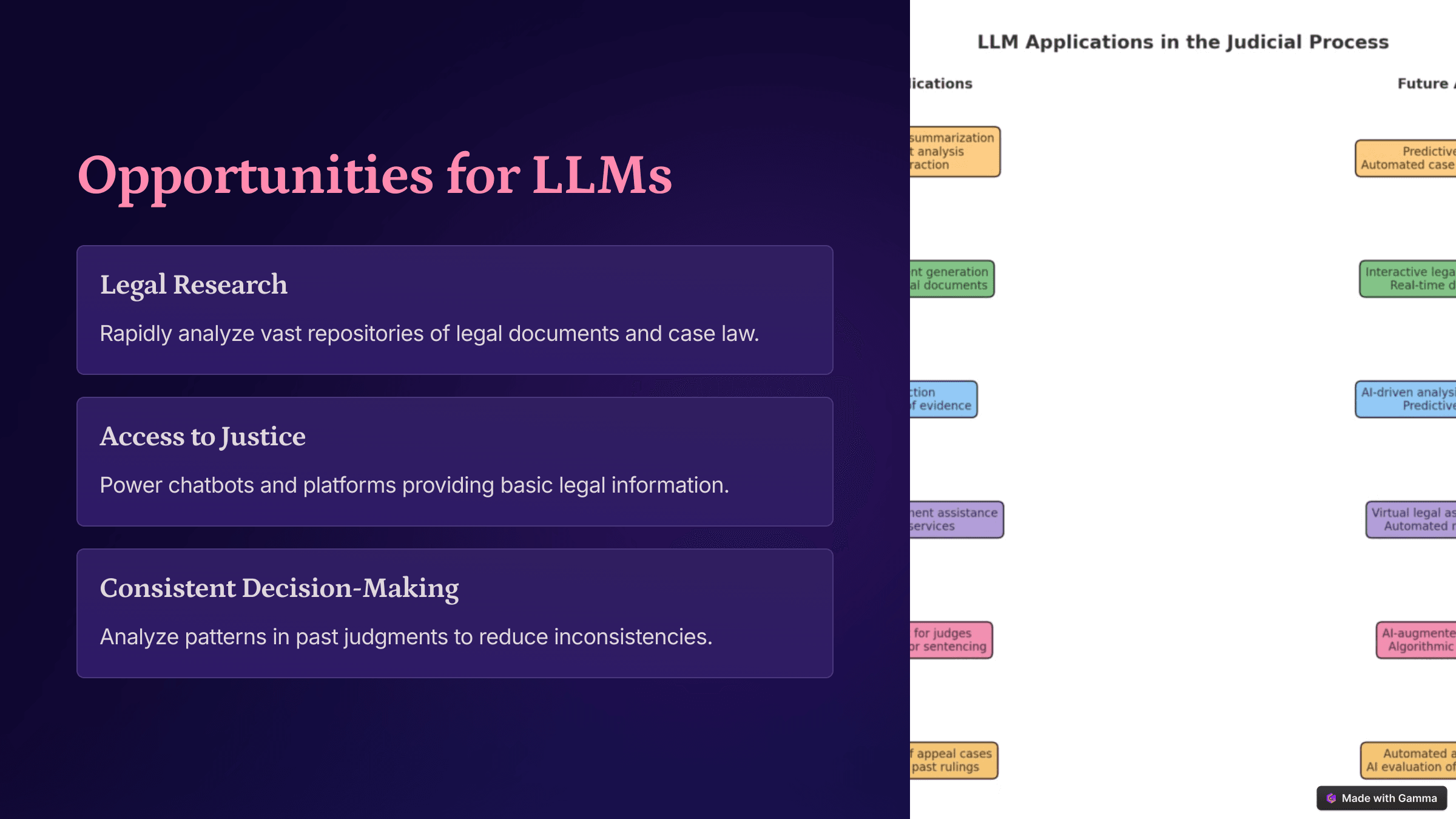
Large Language Models offer significant opportunities to enhance efficiency, accessibility, and consistency in judicial processes. One of the most promising applications is in legal research and document review. LLMs can rapidly analyze vast repositories of legal documents, case law, and statutes, identifying relevant precedents and extracting key information with a level of speed and accuracy that surpasses human capabilities [6].
For example, the case of ROSS Intelligence, an AI-powered legal research tool, demonstrates the potential of LLMs in this area. ROSS was able to analyze thousands of cases in seconds, providing lawyers with relevant precedents and helping them construct stronger arguments more efficiently [7]. Another example is ROSS Intelligence’s EVA, which has been used by law firms to analyze briefs and provide insights on judges’ past rulings, helping lawyers tailor their arguments more effectively [22].
LLMs also have the potential to improve access to justice through automated legal services. By powering chatbots and online platforms, these models can provide basic legal information and guidance to individuals who might otherwise struggle to afford legal representation. The DoNotPay chatbot, dubbed the world’s first “robot lawyer,” exemplifies this application, helping users with tasks ranging from contesting parking tickets to navigating small claims court procedures [8].
Furthermore, LLMs could contribute to more consistent and objective decision-making in certain legal contexts. By analyzing patterns in past judgments and applying standardized criteria, these models could help reduce inconsistencies in areas such as sentencing or bail decisions. However, it is crucial to note that this application requires careful oversight to ensure fairness and avoid perpetuating historical biases.
Technical Challenges and Limitations
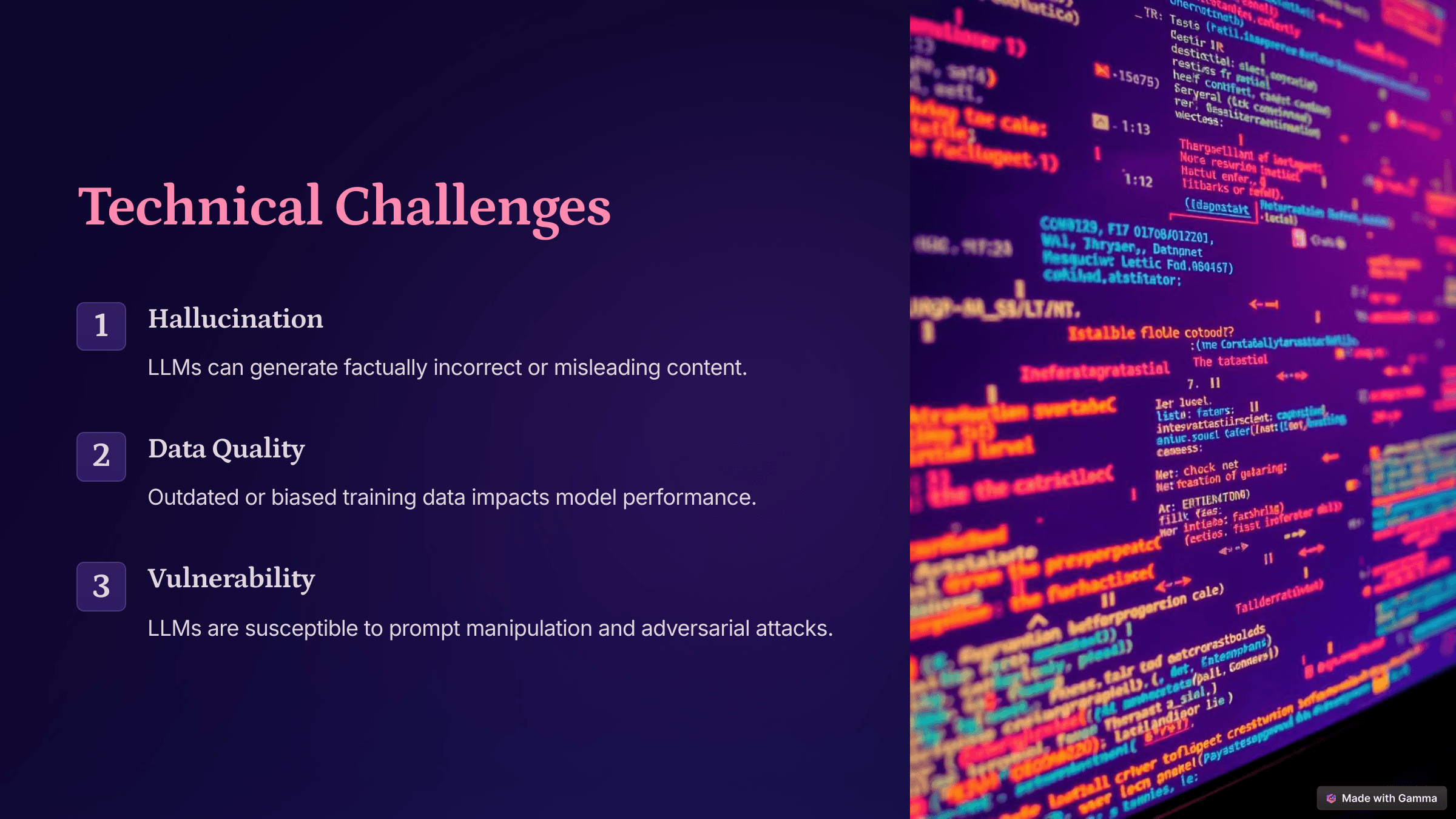
Despite their potential, LLMs face several technical challenges that limit their reliability in legal contexts. One significant issue is the phenomenon known as “hallucination,” where LLMs generate content that is factually incorrect or misleading. A study by Cormack et al. (2023) found that the rate of hallucinations in LLMs responding to legal queries ranged from 69% to 88%, raising serious concerns about their reliability in legal settings [9].
To address the “hallucination” problem, recent research has focused on developing more robust training methods and post-processing techniques. For instance, Xu et al. (2021) proposed a method called “constrained language modeling” that significantly reduced the rate of hallucinations in legal text generation [23]. Additionally, explainable AI (XAI) techniques are being explored to enhance the transparency and interpretability of LLMs in legal contexts. The SHAP (SHapley Additive exPlanations) framework, for example, has been adapted for use with legal LLMs, allowing for better understanding of how these models arrive at their conclusions [24].
The quality and currency of training data also significantly impact LLM performance. If the training corpus is outdated or biased, the model’s outputs may be inaccurate or reflect outdated legal standards. Keeping LLMs up-to-date with the latest legal developments presents a considerable challenge, particularly given the rapid pace of legislative changes and case law evolution [10].
Another technical limitation is the vulnerability of LLMs to prompt manipulation and adversarial attacks. Research has shown that carefully crafted inputs can lead LLMs to produce biased or incorrect outputs, which could have serious implications in legal contexts where the stakes are high [11].
Ethical and Legal Considerations
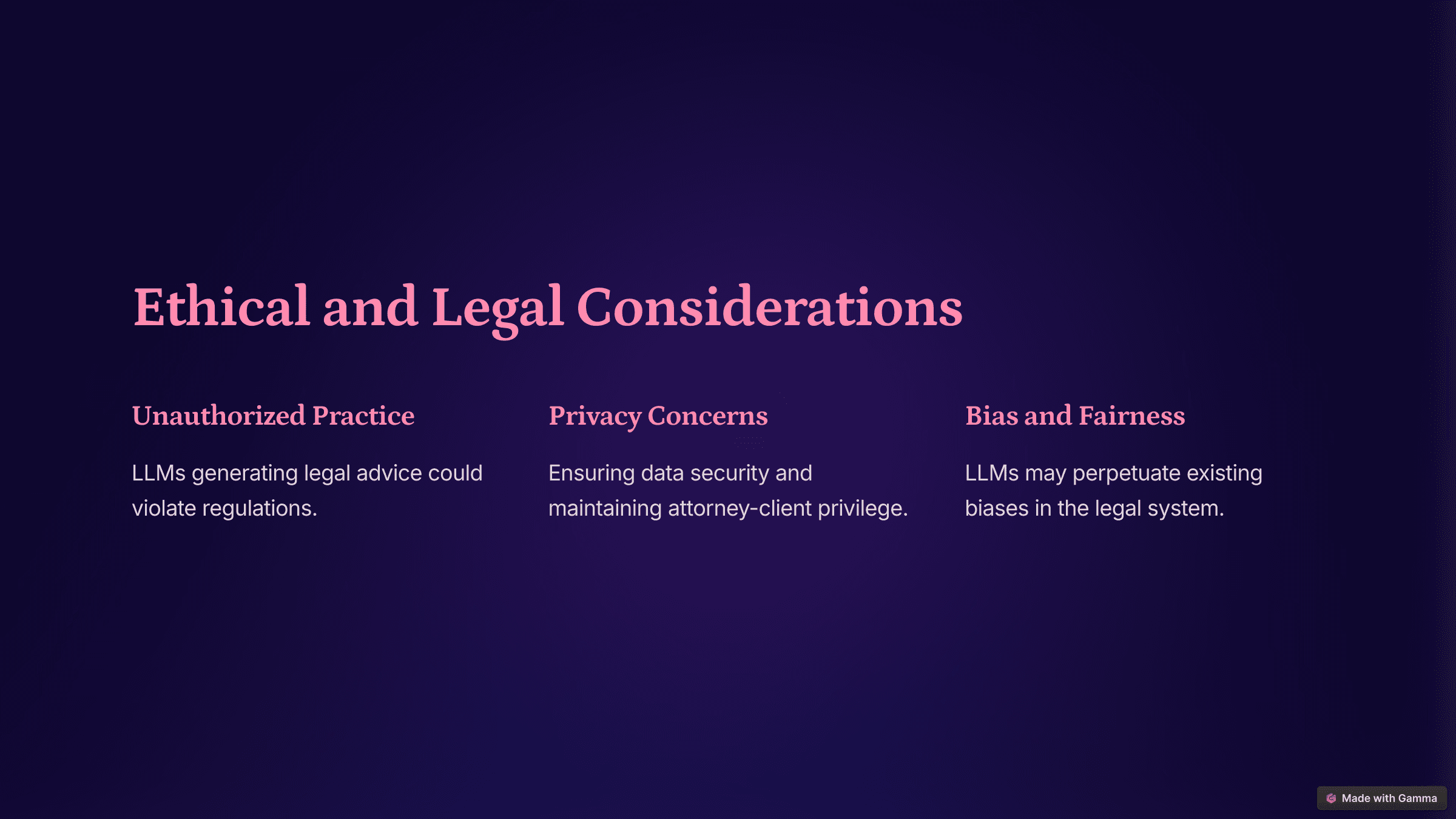
The deployment of LLMs in judicial processes raises significant ethical and legal concerns. One primary issue is the potential for unauthorized practice of law (UPL). Many jurisdictions have strict regulations prohibiting non-lawyers from providing legal advice. The use of LLMs to generate legal guidance or documents could potentially violate these regulations, necessitating careful consideration of how these tools are implemented and presented to users [12].
Privacy and confidentiality represent another critical concern. LLMs process vast amounts of data, including potentially sensitive legal information. Ensuring the security of this data and maintaining attorney-client privilege in AI-assisted legal work presents significant challenges [13]. The use of LLMs in legal contexts raises significant data privacy concerns, particularly in light of regulations such as the General Data Protection Regulation (GDPR) in the European Union and the California Consumer Privacy Act (CCPA) in the United States. These regulations impose strict requirements on the processing of personal data, which may complicate the use of LLMs trained on large datasets of legal documents [25].
To address these concerns, researchers are exploring techniques such as federated learning and differential privacy, which allow for the training of LLMs on sensitive legal data while preserving individual privacy [26].
Bias and fairness in AI-assisted legal decisions are also major ethical considerations. LLMs, trained on historical data, may inadvertently perpetuate existing biases in the legal system. For instance, a study by Angwin et al. (2016) found that an AI system used for recidivism prediction was biased against African American defendants [14]. Mitigating such biases in LLMs used for legal applications is crucial to ensure equitable outcomes.
Impact on Legal Professionals and Education
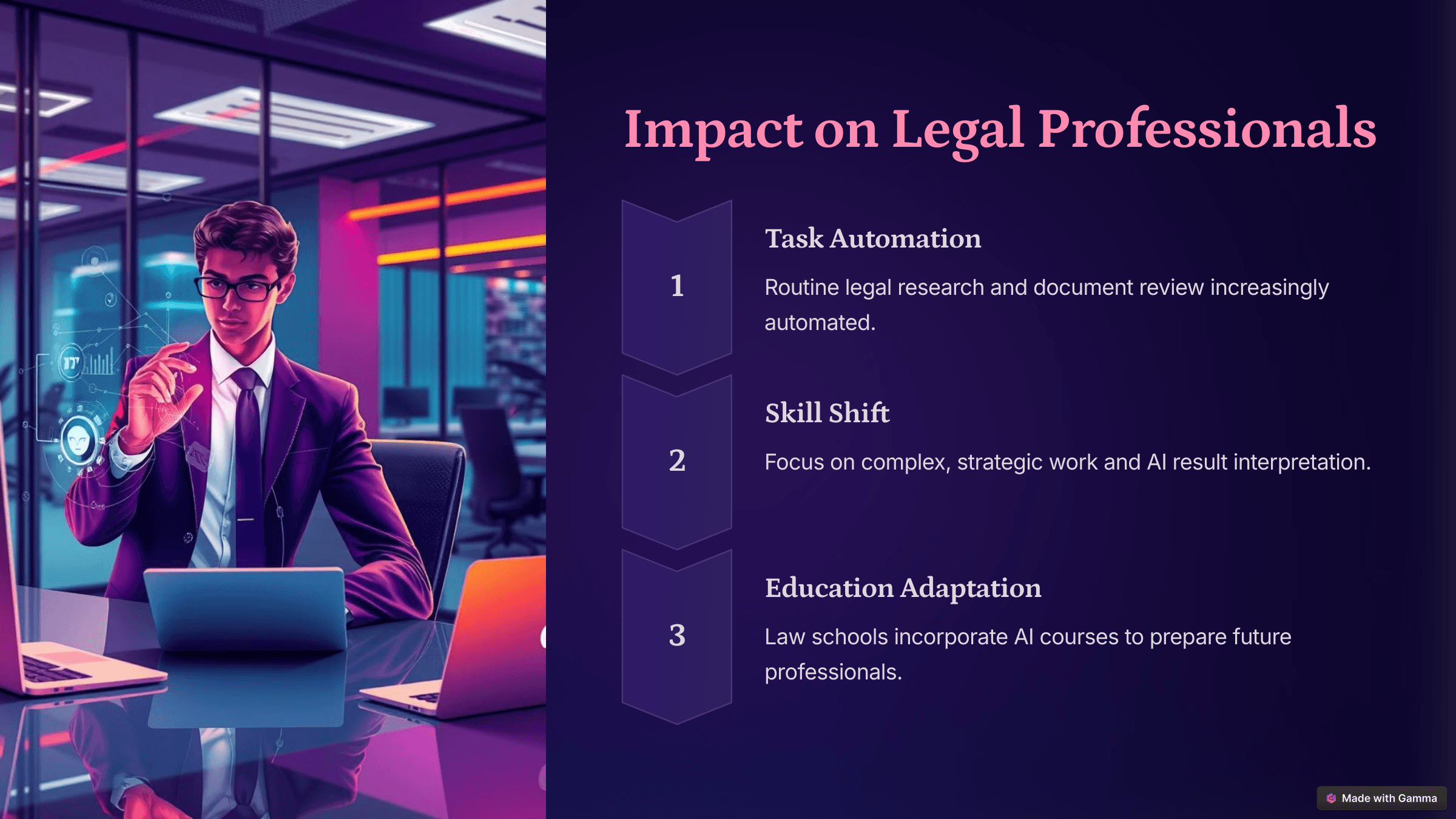
The integration of LLMs is likely to significantly impact the roles of legal professionals. Routine tasks such as basic legal research and document review may increasingly be automated, freeing up lawyers to focus on more complex, strategic work. This shift may require a reevaluation of job responsibilities and skills within law firms and legal departments [15].
The impact of LLMs is likely to vary across different legal roles. For litigators, LLMs may enhance case preparation and strategy development, while for transactional lawyers, they could streamline due diligence processes and contract drafting. Paralegals and legal researchers may see significant changes in their roles, with a shift towards managing and interpreting AI-generated outputs rather than conducting traditional legal research [27].
Law firms and corporate legal departments are adapting to this technological shift in various ways. For instance, some firms have established AI task forces or appointed chief innovation officers to oversee the integration of LLMs and other AI technologies into their practice [28].
Legal education will need to adapt to prepare students for this evolving landscape. Law schools may need to incorporate courses on AI and its applications in law, ensuring that future legal professionals are equipped to work alongside these technologies effectively. Developing “AI literacy” among legal professionals will be crucial, enabling them to understand both the capabilities and limitations of LLMs and other AI tools [16].
Regulatory and Governance Frameworks
Current legal frameworks are often ill-equipped to address the challenges posed by LLMs in judicial processes. Many existing regulations were not designed with AI in mind, creating potential gaps and ambiguities. For example, questions arise about liability in cases where an AI system contributes to a legal error or biased decision [17].
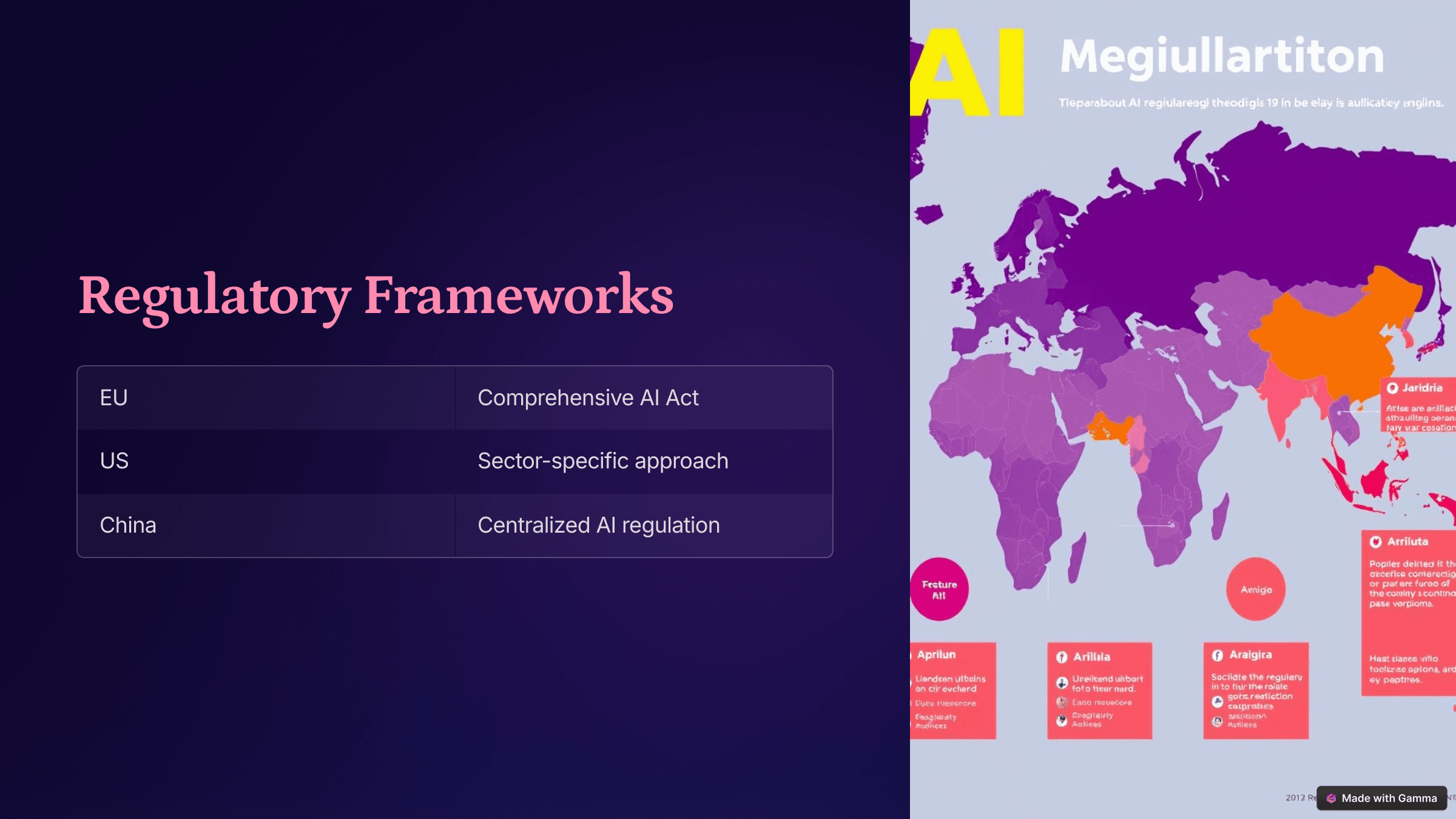
Different jurisdictions are taking varied approaches to regulating LLMs in legal contexts. While the European Union is proposing comprehensive regulations through its AI Act, the United States has taken a more sector-specific approach. In contrast, China has implemented a more centralized regulatory framework for AI, including its use in legal applications [29].
Singapore offers an interesting case study in LLM integration in the judiciary. The Singapore Courts have implemented an AI-powered sentencing analytics tool, demonstrating a proactive approach to leveraging AI while maintaining human oversight in judicial decision-making [30].
Several models for AI governance in the judiciary have been proposed. The European Union’s approach, as outlined in the proposed AI Act, suggests a risk-based framework for regulating AI in high-stakes applications, including legal contexts [18]. This model could serve as a starting point for developing comprehensive governance structures for LLMs in judicial processes.
International perspectives on this issue vary, with some jurisdictions taking a more proactive approach to regulation, while others adopt a wait-and-see stance. Harmonizing these approaches to create consistent global standards for LLMs in legal applications remains a significant challenge [19].
Analysis of Current Trends
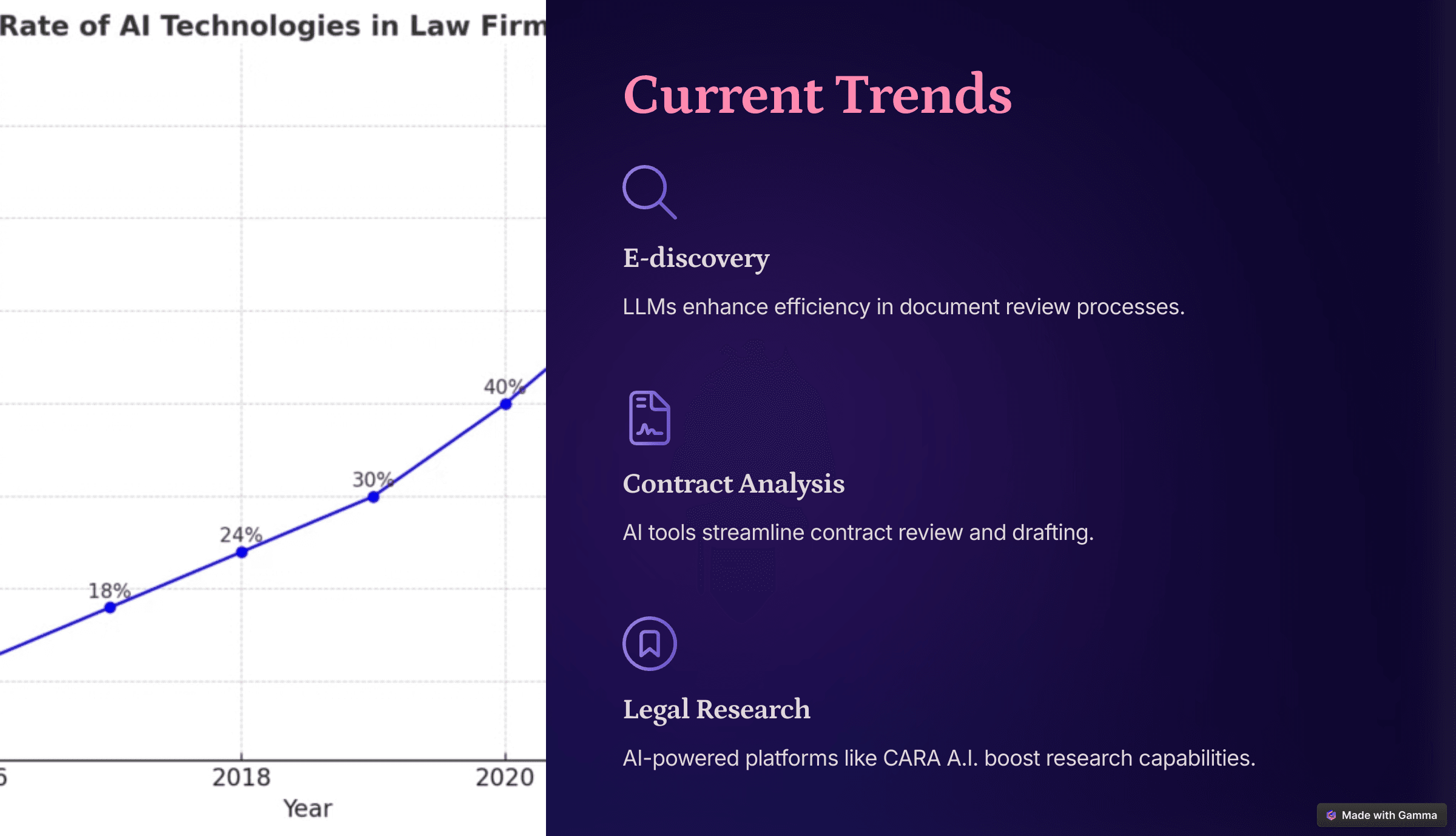
The integration of LLMs in judicial processes is gaining momentum, with several emerging trends shaping the landscape. Many courts and law firms are experimenting with LLM-powered tools for tasks such as e-discovery, contract analysis, and legal research. For instance, the AI-powered tool CARA A.I. by Casetext is being used by numerous law firms to enhance legal research efficiency [20].
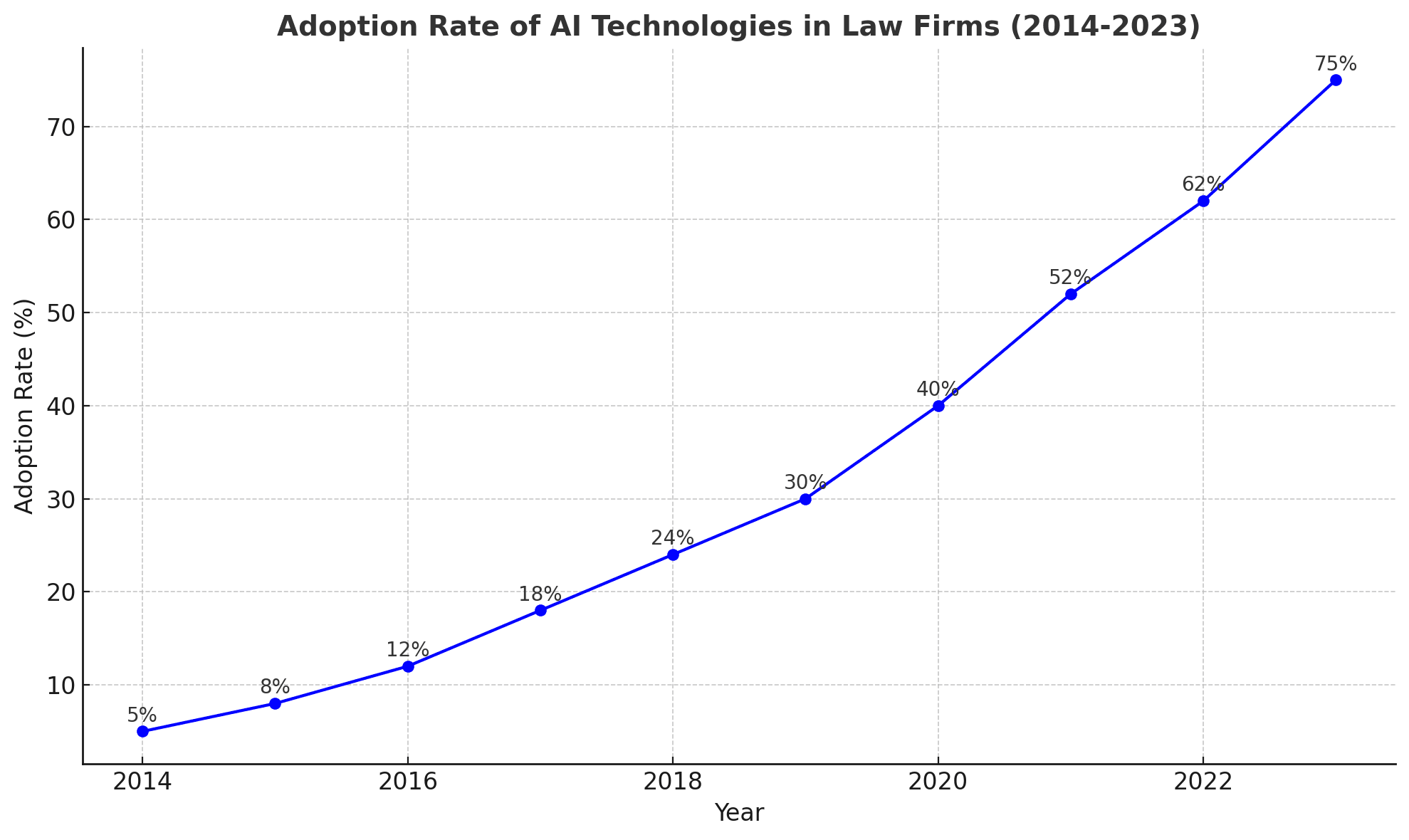
Attitudes among legal professionals towards AI are shifting, albeit gradually. A 2020 survey by Altman Weil found that 41% of law firms were already using AI tools, up from 29% in 2018 [21]. This trend suggests growing acceptance of AI technologies, including LLMs, in legal practice.
Key areas of ongoing research and development include:
-
Explainable AI: Developing LLMs that can provide clear rationales for their outputs, crucial for transparency in legal decision-making.
-
Bias mitigation: Techniques to identify and reduce biases in LLM training data and outputs.
-
Domain-specific LLMs: Models specifically trained on legal corpora to enhance accuracy and relevance in legal applications.
Future Outlook
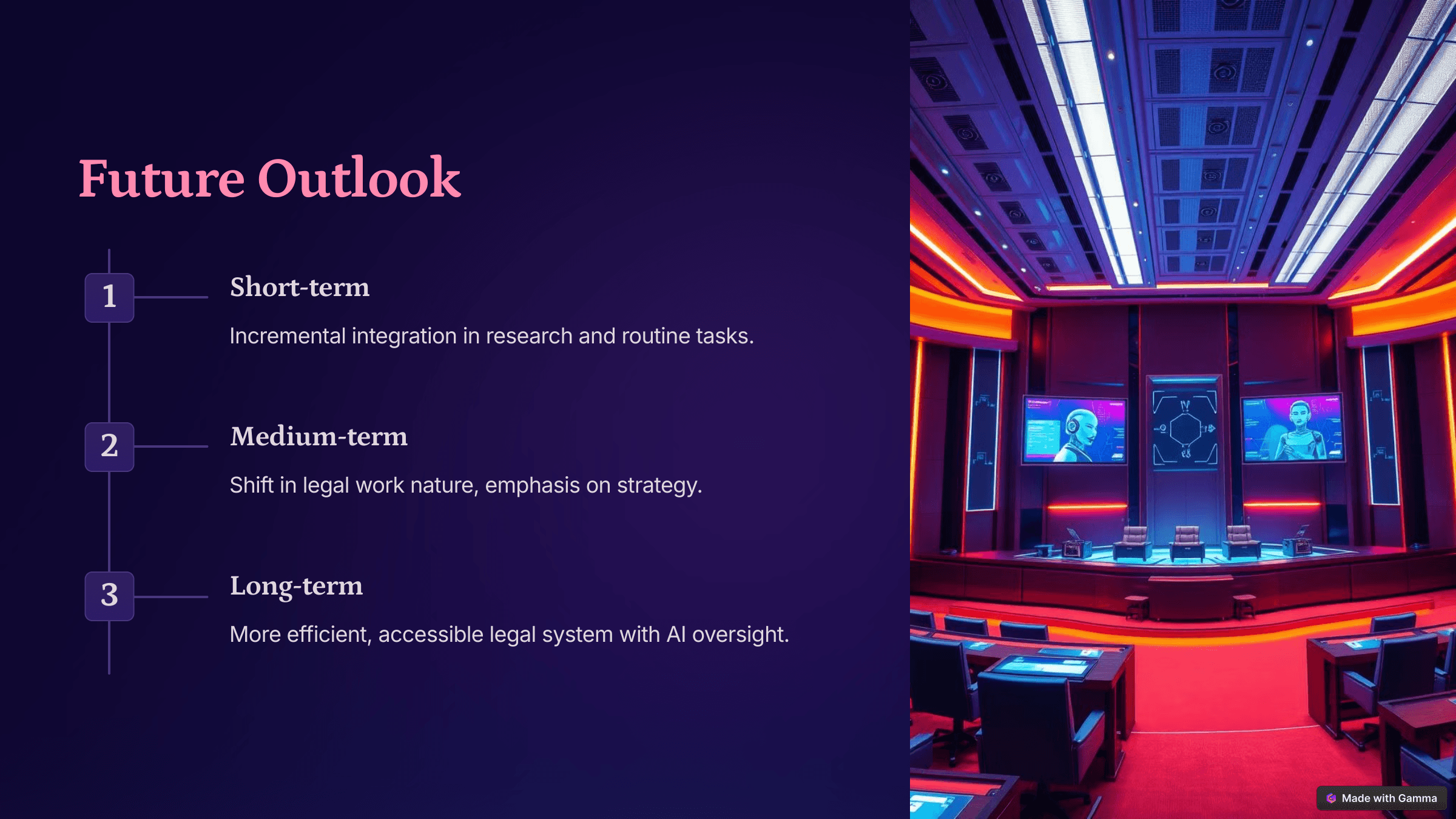
The future of LLMs in judicial processes is likely to be characterized by incremental integration rather than wholesale replacement of human judgment. We can expect to see more sophisticated LLM applications in legal research, document analysis, and preliminary decision-making in routine cases.
Long-term impacts may include a shift in the nature of legal work, with increased emphasis on high-level strategy and complex problem-solving as LLMs handle more routine tasks. The legal system may become more efficient and accessible, but careful oversight will be crucial to maintain fairness and accountability.
Areas requiring further exploration include the development of robust ethical frameworks for AI in law, techniques for ensuring LLM reliability in high-stakes legal contexts, and strategies for effectively integrating human expertise with AI capabilities in legal decision-making processes.
Conclusion
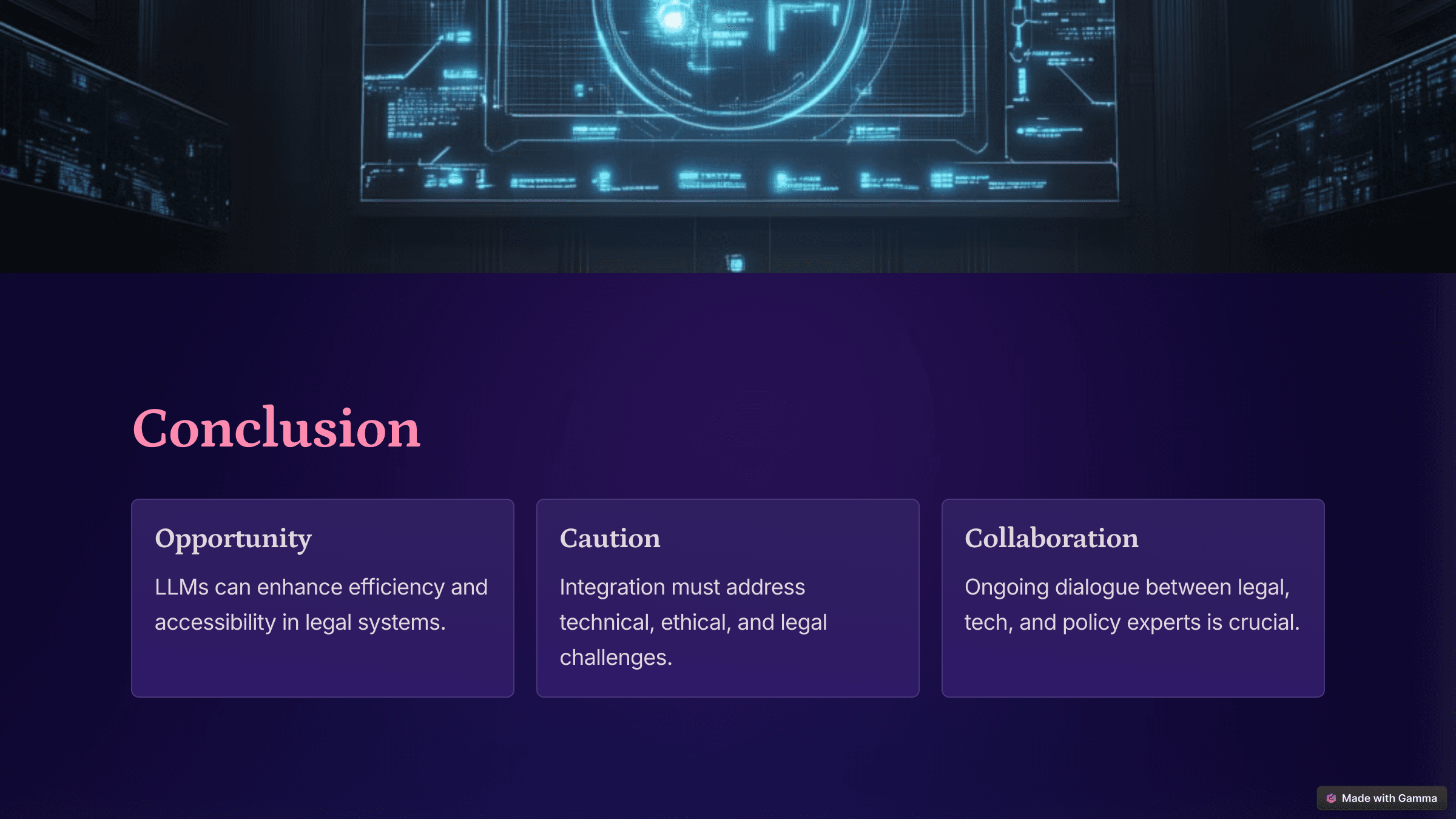
The integration of Large Language Models in judicial processes represents a significant opportunity to enhance efficiency, accessibility, and consistency in our legal systems. However, this integration must be approached with caution, addressing the technical, ethical, and legal challenges it presents. As we move forward, it is crucial that we develop comprehensive regulatory frameworks, adapt legal education, and foster ongoing dialogue between legal professionals, technologists, and policymakers. Only through such collaborative efforts can we harness the potential of LLMs while upholding the fundamental principles of justice, fairness, and accountability that are the cornerstones of our judicial system.
 -
-  -
-  -
-  -
-  -
-  -
-  -
-  -
-  -
- 
References
[1] Surden, H. (2019). Artificial Intelligence and Law: An Overview. Georgia State University Law Review, 35(4), 1305-1337.
[2] Brown, T. B., et al. (2020). Language Models are Few-Shot Learners. arXiv preprint arXiv:2005.14165.
[3] Alarie, B., Niblett, A., & Yoon, A. H. (2018). How artificial intelligence will affect the practice of law. University of Toronto Law Journal, 68(supplement 1), 106-124.
[4] Pasquale, F. (2020). New Laws of Robotics: Defending Human Expertise in the Age of AI. Harvard University Press.
[5] Barocas, S., Hardt, M., & Narayanan, A. (2019). Fairness and Machine Learning. fairmlbook.org.
[6] McGinnis, J. O., & Pearce, R. G. (2014). The great disruption: How machine intelligence will transform the role of lawyers in the delivery of legal services. Fordham Law Review, 82(6), 3041-3066.
[7] Katz, D. M. (2013). Quantitative Legal Prediction, or, How I Learned to Stop Worrying and Start Preparing for the Data-Driven Future of the Legal Services Industry. Emory Law Journal, 62(4), 909-966.
[8] Cabral, J. E., et al. (2012). Using technology to enhance access to justice. Harvard Journal of Law & Technology, 26(1), 241-324.
[9] Cormack, G. V., et al. (2023). Hallucinating Law: Legal Mistakes with Large Language Models are Pervasive. arXiv preprint arXiv:2305.14233.
[10] Levendowski, A. (2018). How Copyright Law Can Fix Artificial Intelligence’s Implicit Bias Problem. Washington Law Review, 93, 579-630.
[11] Wallace, E., et al. (2019). Universal Adversarial Triggers for Attacking and Analyzing NLP. arXiv preprint arXiv:1908.07125.
[12] Brescia, R. H. (2016). What We Know and Need to Know About Disruptive Innovation in Legal Services. South Carolina Law Review, 67, 203-222.
[13] Goldenfein, J. (2019). Algorithmic Transparency and Decision-Making Accountability: Thoughts for Buying Machine Learning Algorithms. In Closer to the Machine: Technical, Social, and Legal Aspects of AI. Office of the Victorian Information Commissioner.
[14] Angwin, J., et al. (2016). Machine Bias. ProPublica, May 23, 2016.
[15] Susskind, R. (2017). Tomorrow’s Lawyers: An Introduction to Your Future. Oxford University Press.
[16] Katz, D. M. (2020). Disciplinary Boundaries in the Age of Data-Driven Law. Seton Hall Law Review, 51(2), 289-318.
[17] Chagal-Feferkorn, K. A. (2019). The Reasonable Algorithm. Journal of Law, Technology & Policy, 2018(1), 111-158.
[18] European Commission. (2021). Proposal for a Regulation laying down harmonised rules on artificial intelligence. COM(2021) 206 final.
[19] Cath, C., et al. (2018). Artificial Intelligence and the ‘Good Society’: the US, EU, and UK approach. Science and Engineering Ethics, 24(2), 505-528.
[20] Remus, D., & Levy, F. (2017). Can Robots Be Lawyers: Computers, Lawyers, and the Practice of Law. Georgetown Journal of Legal Ethics, 30, 501-558.
[21] Altman Weil. (2020). 2020 Law Firms in Transition Survey. Altman Weil, Inc.
[22] Hudgins, V. (2020). ROSS Intelligence Launches New AI-Powered Legal Memo Generator EVA. Artificial Lawyer, June 23, 2020.
[23] Xu, J., et al. (2021). Constrained Language Models Yield Few-Shot Semantic Parsers. arXiv preprint arXiv:2104.08768.
[24] Lundberg, S. M., & Lee, S. I. (2017). A Unified Approach to Interpreting Model Predictions. Advances in Neural Information Processing Systems, 30.
[25] Tene, O., & Polonetsky, J. (2018). Beyond IRBs: Ethical Guidelines for Data Research. Washington and Lee Law Review Online, 74(2), 162-195.
[26] Kaissis, G. A., et al. (2020). Secure, privacy-preserving and federated machine learning in medical imaging. Nature Machine Intelligence, 2(6), 305-311.
[27] Simshaw, D. (2018). Ethical Issues in Robo-Lawyering: The Need for Guidance on Developing and Using Artificial Intelligence in the Practice of Law. Hastings Law Journal, 70, 173-214.
[28] Knobbe, M. R. (2018). Artificial Intelligence: The Next Frontier in Legal Knowledge Management. Legal Information Management, 18(1), 31-35.
[29] Roberts, H., et al. (2021). The Chinese approach to artificial intelligence: an analysis of policy, ethics, and regulation. AI & Society, 36, 59-77.
[30] Chen, A. (2020). ‘Intelligent’ Sentencing: Singapore Develops AI Tool to Help Courts Decide Punishment. South China Morning Post, March 1, 2020.
Links to articles used.
-
AI is creeping into the world’s courts. Should we be concerned?
-
AI, Judges and Judgement: Setting the Scene, Harvard Kennedy School
-
The Challenges of Integrating AI-Generated Evidence Into the Legal System
-
AI in the Courts: How Worried Should We Be?, Duke University
-
AI in the Judicial System: Possible Uses and Ethical Considerations
-
How to Improve Technical Expertise for Judges in AI-related Litigation, Brookings
-
Clinician Voices on Ethics of LLM Integration in Healthcare: A Thematic Study
-
JudgeLM: Fine-tuned Large Language Models as Scalable Judges, ar5iv
-
Optimizing Numerical Estimation and Operational Efficiency in the Legal Domain
-
Large Language Models in Healthcare and Medical Domain: A Review
-
A Case for Accessible Justice: Can LLMs Make Legal Services More Affordable?, Relativity
-
Exploring the Nexus of Large Language Models and Legal Systems: A Short Review
-
Gen AI In Law, Unleashing Legal Innovation with Open Source LLMs
-
Hallucinating Law: Legal Mistakes with Large Language Models Are Pervasive
-
Top 5 Applications of Large Language Models (LLMs) in Legal Practice | Medium
-
Exploring the Nexus of Large Language Models and Legal Systems: A Short Review
-
5 Prime Ways Law Firms Can Unlock Efficiency with Large Language Models | Medium
-
Hallucinating Law: Legal Mistakes with Large Language Models Are Pervasive
-
Top 5 Applications of Large Language Models (LLMs) in Legal Practice | Medium
The integration of large language models in judicial processes, opportunities, challenges, and ethical considerations.
Dit artikel is exclusief beschikbaar voor nieuwsbrief-abonnees. Schrijf je in voor toegang tot 880+ artikelen.
Geen spam. Uitschrijven op elk moment.
AI & Security Intelligence
Wekelijkse nieuwsbrief met AI updates, security alerts en compliance inzichten, direct in uw inbox.
Security & AI Operating Model
Advisory met executiekracht
Van BIO2 en NIS2 tot EU AI Act, embedded in uw operating model, niet als extern project. Maandelijks opzegbaar, met assessments als bewijsvoering.