Building a Resilient Data Governance Framework: From Fundamentals to Advanced Strategies
In the digital era, data has emerged as a critical driver of business success, shaping decisions, strategies, and innovations. However, without robust governance, data can quickly transition from being a valuable asset to a substantial liability. A comprehensive data governance framework ensures that data remains accurate, secure, and aligned with organizational goals, unlocking its full potential. This article delves into advanced strategies for building a resilient data governance framework, offering actionable insights and expert perspectives.

Why Data Governance Matters
The surge in data generation, combined with stringent regulatory landscapes, has heightened the need for effective data governance. Organizations not only face risks from non-compliance but also miss out on opportunities due to poor data quality.A well-designed data governance framework enables businesses to:
-
Mitigate risks associated with data breaches and inaccuracies.
-
Enhance operational efficiency by streamlining data management.
-
Build trust with stakeholders by ensuring data integrity and compliance.
This guide provides a roadmap for organizations aiming to develop and refine their data governance strategies, from foundational principles to advanced approaches.
Understanding Data Governance
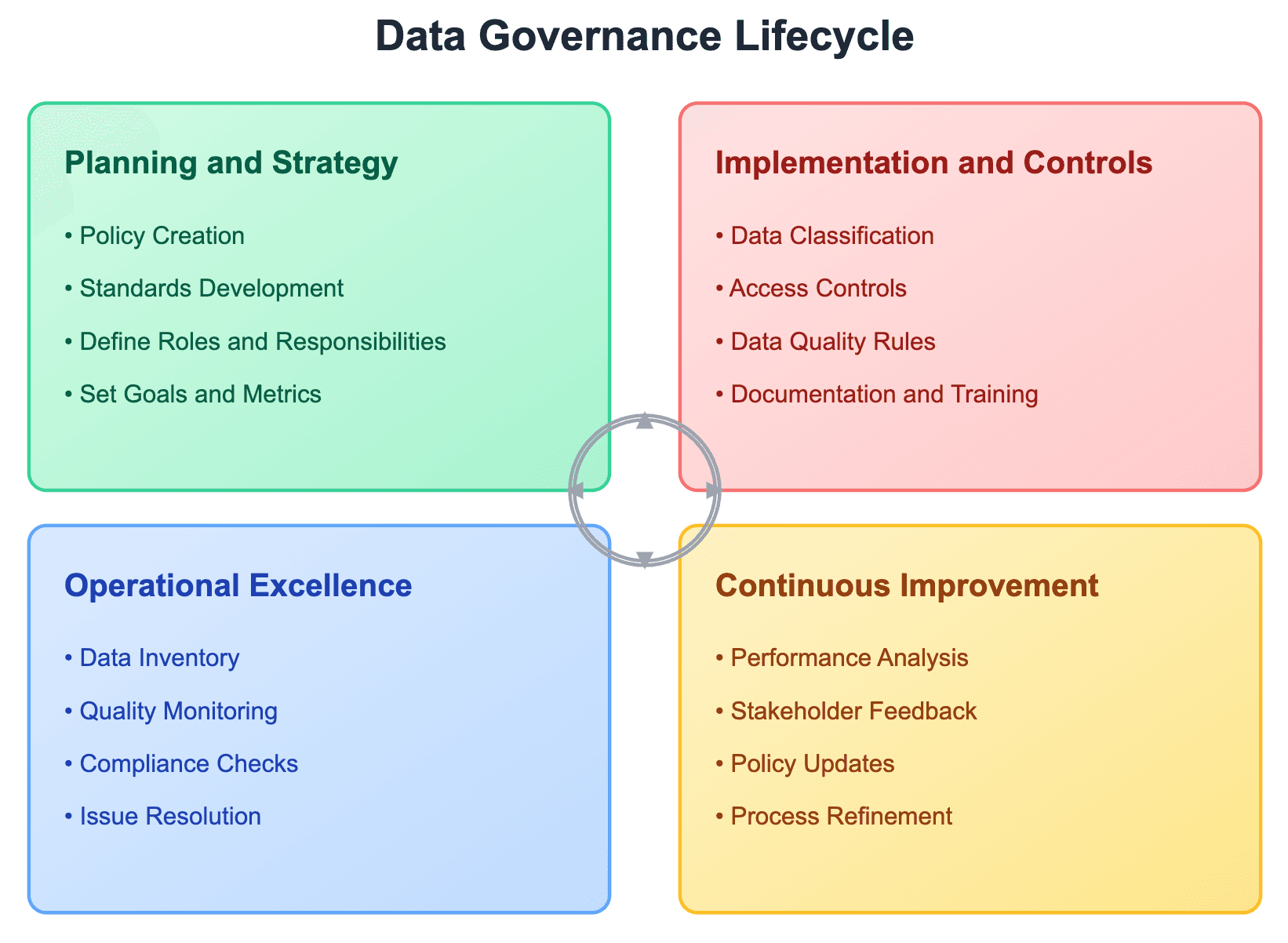
Data governance refers to the set of policies, roles, and processes ensuring that data is managed consistently and responsibly across an organization. It encompasses several dimensions, including data quality, security, compliance, and access management.
Core Objectives of Data Governance
-
Data Quality Assurance: Maintaining data accuracy, consistency, and reliability.
-
Regulatory Compliance: Adhering to frameworks such as GDPR, HIPAA, and the Data Protection Act (2019).
-
Data Security: Safeguarding sensitive data from unauthorized access and breaches.
-
Operational Efficiency: Reducing inefficiencies through standardized data practices.
The Role of Governance in a Data-Driven World
With businesses increasingly reliant on advanced analytics and AI, data governance ensures these technologies operate on trustworthy and unbiased data. Moreover, as cyber threats grow, governance frameworks serve as a defense mechanism against reputational and financial damages.
Key Components of a Resilient Data Governance Framework
1. Setting Clear Goals
A successful framework begins with defining objectives aligned with organizational priorities. Examples include:
-
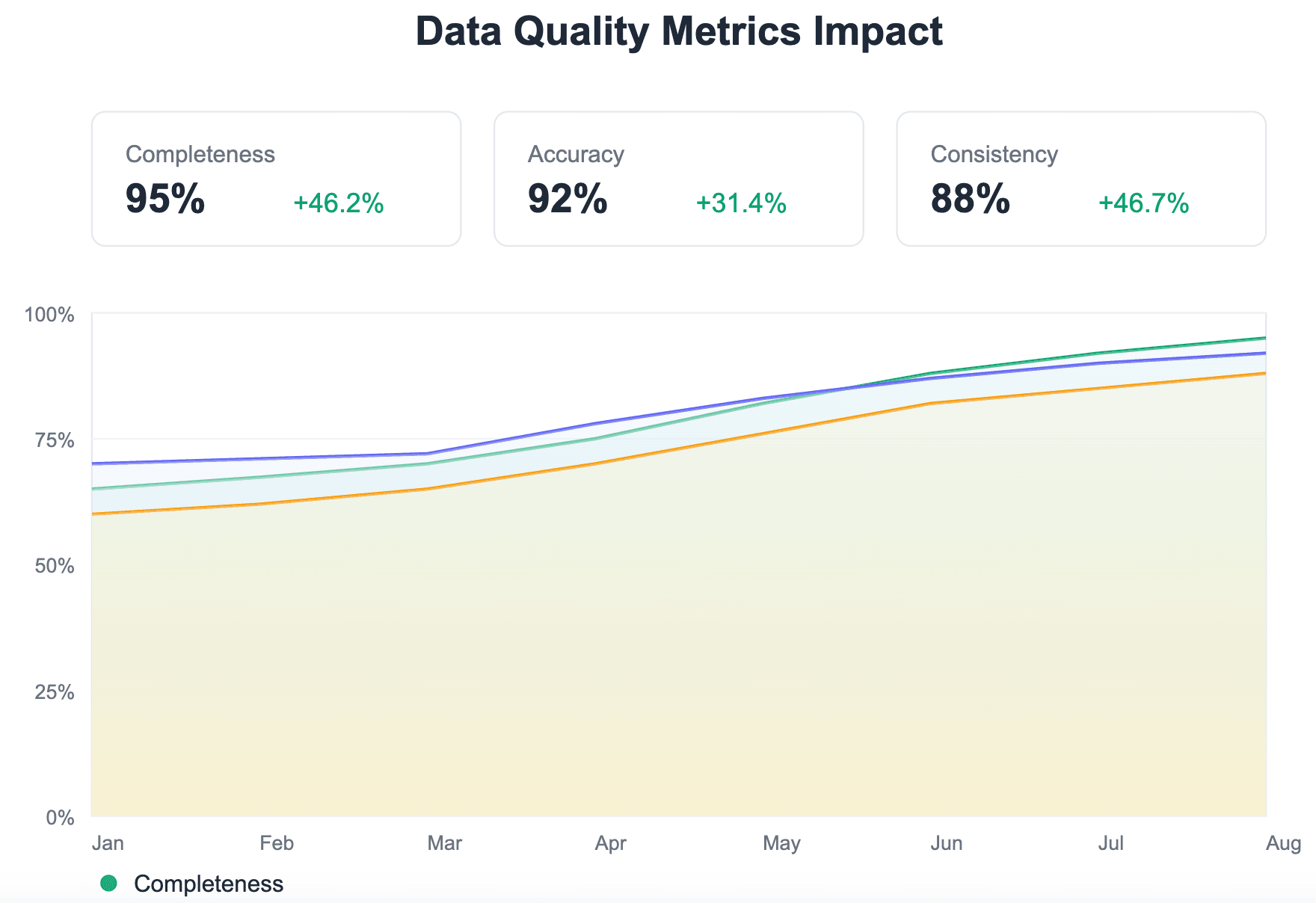
Achieving 99% data accuracy within critical systems.
-
Complying with GDPR regulations across all data handling operations.
-
Enhancing operational efficiency by reducing data redundancy by 20%.
Clear goals enable organizations to measure success and prioritize initiatives effectively.
2. Establishing Roles and Responsibilities
Data governance thrives on accountability. Assigning distinct roles ensures streamlined decision-making and execution.
Key Roles:
-
Data Owners: Senior-level individuals responsible for data within their domain, including setting access policies and quality benchmarks.
-
Data Stewards: Operational custodians ensuring data governance policies are followed and data remains accurate.
-
Data Governance Committee: A cross-functional team driving strategy, resolving conflicts, and reviewing progress.
3. Developing Policies and Standards
Policies serve as the backbone of governance, defining how data is handled across its lifecycle.
Essential Policies:
-
Data Classification Policy: Categorize data into public, confidential, and restricted categories.
-
Data Retention Policy: Define how long data is stored and when it should be disposed of.
-
Access Control Policy: Implement role-based access controls (RBAC) to limit exposure to sensitive information.
Case Study:
A multinational healthcare company implemented a comprehensive data classification policy to comply with HIPAA. The initiative reduced unauthorized access incidents by 40% within a year.
4. Leveraging Technology
Modern governance frameworks rely on tools to automate and monitor compliance.
-
Data Cataloging Tools (e.g., Collibra, Alation): Streamline metadata management.
-
Policy Management Software (e.g., OneTrust, TrustArc): Centralize policy enforcement.
-
Analytics Platforms (e.g., Tableau, Power BI): Measure data governance KPIs, like data quality scores.
5. Fostering a Data Governance Culture
Technology and policies alone cannot drive governance. Organizations must embed governance principles into their culture.
-
Training Programs: Equip employees with knowledge about data policies and their responsibilities.
-
Leadership Advocacy: Senior management demonstrating commitment to governance reinforces its importance.
-
Incentives: Recognize and reward teams that excel in maintaining governance standards.
Current Trends in Data Governance
1. Focus on Privacy by Design
Regulations like GDPR emphasize integrating privacy into system design from the outset. Organizations are embedding automated privacy checks within data pipelines to minimize risk.
2. AI-Driven Governance
AI and machine learning are being used to monitor data compliance and detect anomalies. These technologies provide real-time insights, enabling proactive governance.
3. Expansion of ESG Metrics
Environmental, Social, and Governance (ESG) reporting increasingly depends on robust data governance to ensure the reliability of sustainability metrics.
Adapting to Evolving Needs
The future of data governance lies in flexibility and adaptability. As data environments grow more complex, organizations must:
-
Invest in scalable technologies to accommodate data volume growth.
-
Stay ahead of emerging regulations, such as AI-specific governance standards.
-
Embrace data ethics, ensuring that governance frameworks address biases and promote fairness.
Organizations adopting these strategies will not only comply with regulations but also position themselves as leaders in the data-driven economy.
Conclusion
Building a resilient data governance framework requires a blend of strategic planning, technological adoption, and cultural change. By setting clear goals, defining roles, developing robust policies, and fostering a governance culture, organizations can unlock the true value of their data assets while mitigating risks.
Data governance is an evolving journey. Start small, involve stakeholders, and continuously refine your framework to stay ahead of challenges. With a resilient governance structure in place, businesses can confidently navigate the complexities of the digital age.
References
-
DAMA International. (2017). The DAMA Guide to the Data Management Body of Knowledge (DAMA-DMBOK). Technics Publications.
-
European Union. (2016). General Data Protection Regulation (GDPR).
-
Collibra. (2022). Modernizing Data Governance Frameworks: Trends and Insights.
-
Gartner. (2023). Data Governance Tools Magic Quadrant.
-
ISO. (2015). ISO/IEC 38500: IT Governance Standards.
Building a Resilient Data Governance Framework: From Fundamentals to Advanced Strategies
Dit artikel is exclusief beschikbaar voor nieuwsbrief-abonnees. Schrijf je in voor toegang tot 880+ artikelen.
Geen spam. Uitschrijven op elk moment.
AI & Security Intelligence
Wekelijkse nieuwsbrief met AI updates, security alerts en compliance inzichten, direct in uw inbox.
Security & AI Operating Model
Advisory met executiekracht
Van BIO2 en NIS2 tot EU AI Act, embedded in uw operating model, niet als extern project. Maandelijks opzegbaar, met assessments als bewijsvoering.